
Choosing the Best Indoor Lighting for Your Home
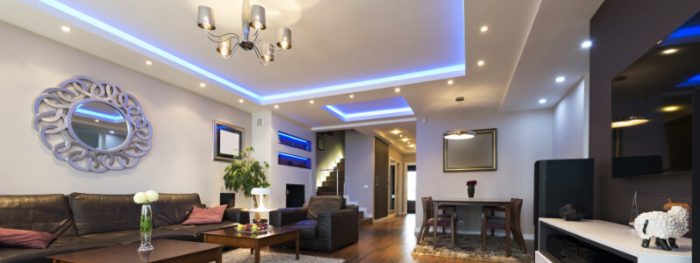
Welcome to Our Home Lighting Guide
Choosing the right kind of lighting for your home can be a difficult process, especially given the hundreds of different styles of lighting fixtures and types of bulbs available. As an electrical wholesaler, we have helped thousands of customers in selecting the ideal lighting for their homes, and as a result, we have become aware of the numerous challenges people face while making this decision. This is why we have created this home lighting guide: to help make the decision process less daunting and make sure you chose the right lights.
If you are asking yourself ‘What is the best lumen for indoor lights?’, or ‘How do I work out the best kelvin for my room?’, or simply ‘What lighting fixtures work best in each room?’, then this guide is for you. Within this indoor lighting guide, we will cover all aspects of lighting for the home such as the different functions lighting has, how to determine the best lumen and kelvin for lights, and provide indoor lighting ideas for specific rooms.
Article Summary
Overall, there are many important things to consider when choosing indoor lighting, which is why we advise reading the entire guide. However, if you are strapped for time, the key points can be found below:
- Room size and shape is the first thing anyone should consider before purchasing indoor lights. This will decide the total number and type of lights needed and, as a result, the amount of money you will need to spend.
- Good lighting improves safety as hazards in the home are easily spotted. Security is also improved by having good lighting as well-lit areas are easily picked up on camera and act as a deterrent.
- Lighting serves three main purposes: ambient, task, and accent. You should consider not only the practical applications of lighting, but also if there are any features in your home that you wish to highlight such as a photograph.
- There are many different sizes, shapes, strengths, and warmness of light bulbs. Some light bulbs are more durable than others, and some even allow for the growth of indoor plants. Basically, you should select light bulbs that go well with your décor while also considering their function.
What to Consider Before Buying Indoor Lights
Indoor rooms should have good lighting, yet this is frequently overlooked. This is true on a practical level because good lighting improves vision and lets us move about our surroundings safely. When used properly, the right lighting can also drastically improve the aesthetic of a room and even improve our moods.
Although this decision is mostly subjective because it depends on the needs and personal tastes of each person, there are some fundamental factors to take into account.
1. Room Size and Shape
When purchasing lights for the home, the size and shape of your room are the first things to consider. For larger rooms, there is a lot more space to light up, so the number of bulbs, as well as their brightness, needs to be considered. The last thing you want is to buy a bunch of expensive lighting fixtures only to realise they do not hold enough bulbs to light your room. Bulb brightness is measured in lumens, so the higher the lumen the brighter the bulb.
Rooms are unique not only in their size but also in their function. For instance, kitchens typically demand a greater lumen level than other rooms since you need to be able to see what you are doing clearly to prevent losing any fingers. As each room has a different function, the lumen level will naturally vary for corridors, dining rooms, and any other rooms.
The indoor lighting design for your home can also help with safety as good visibility helps accurately identify potential hazards – clipping toes on doorframes is a common occurrence in dimly lit hallways, which is not a very pleasant experience! Good lighting also improves security as surveillance cameras can get clearer footage for specific details like facial features. Indoor lighting can also act as a deterrent as it tells people you are at home, warding off potential intruders.
2. The Three Functions
The second consideration for lighting for the home is the three functions of lights: ambient, task, and accent.
Within any given room, you can have several sources of lighting all fulfilling different needs. You could, for instance, have flush lights overhead for general lighting purposes, which might be connected to a dimmer switch to change the ambience, but also picture lights to showcase your lovely self-portrait. For you to unlock the full potential of your indoor lights, it is essential to understand these three lighting functions.
Ambient
Ambient lighting is also known as general lighting, and this is the primary source of light within a room. It allows you to navigate your surroundings and perform basic tasks, whilst also contributing to a pleasant atmosphere. When installing ambient lighting for the home, consider the activities that will take place in each room. Adequate lighting for tasks like reading and writing will reduce the risk of eye strain. You also want even illumination across the room as uneven distribution of lighting can create unwanted shadows and darkened corners.

Task
Task lighting refers to lighting that is designed with specific tasks and activities in mind. An example of this is desk lighting and lamps that are utilised in study areas or workstations. Another example is bathroom lights and under-the-cabinet lighting that provides additional illumination in high-traffic stations.

Accent
Accent lighting is all the decoration lights for the home and is used to highlight and accentuate specific details in a room. This may be objects, architectural features or general areas within a given space. For example, display cabinet lighting or track lighting.
The Type of Bulb
The third thing to consider when choosing your indoor lighting is the types of bulbs you need. As previously mentioned, you could purchase the most stunning lighting fixture, but it won’t do much without the correct bulbs.
Within this section, we will cover the four main types of light bulbs, as well as their unique features and benefits.
- Incandescent light bulbs – These bulbs emit a warm (yellow) light and are commonly used for general lighting appliances like lamps and accent lighting. They can also be used in rooms with minimal traffic, such as storage cupboards, attics and heating closets. The benefit of incandescent bulbs is that they are relatively inexpensive, and they emit a warm, comforting glow. The downside is that these bulbs do not last too long, with an average lifespan of 1200 hours.
- Halogen light bulbs – Halogen bulbs are a type of incandescent lamp that is filled with halogen gas. They are considered an upgrade to incandescent bulbs as, thanks to the special combination of gases, halogen bulbs last slightly longer with a lifespan averaging 2500 hours. Halogen bulbs produce a cool light and are typically used headlamps for vehicles, work lights and various other uses in task lighting.
- LED lightbulbs– LED (Light Emitting Diode) light bulbs have a wide range of uses both in domestic and commercial settings. They are popular lights for homes and can be used for all three functions: ambient, task and accent. Their commercial uses are also varied from lighting indoor spaces to constriction sites in light tower units. Not only are their uses versatile but so are the bulbs themselves as they are available in both cool and warm tones. The main benefit of LED lightbulbs is that they emit energy at a slower rate. This makes them last longer and makes them more cost effective in the long run. In fact, they are the longest-lasting light bulbs with lifespans of up to 50,000 hours.
- Compact fluorescent light bulbs (CFLs) – These light bulbs are more energy efficient than typical incandescent bulbs. They are suitable in general lighting for the home as well as commercial uses. CFLs are also useful for indoor plants and gardening as they can supplement natural light. The average lifespan of a CFL is between 8000 and 20000 hours, making them a decent investment.
What Is the Best Lumen For Indoor Lights?
To calculate the best lumen that is needed for your indoor lighting, you can take the square footage and multiply this by the number of foot-candles that are required.
| Room | Foot Candles |
| Living Room | 10-20 |
| Kitchen (General) | 30-40 |
| Kitchen (Food Prep Areas) | 70-80 |
| Dining Room | 30-40 |
| Hallway* | 5-10 |
| Bedroom | 10-20 |
| Bathroom | 70-80 |
| Study room/ Work focused area | 50-100 |
*Extends to other less frequented areas (closets, storage cupboards etc…)
E.g. A living room that is 11 feet wide and 7 feet long will have square footage of 77ft2.
For a living room that needs 20-foot candles, you will multiply 20 by 77. This means that the lumen required for this room is 1,540 lumens.
What Kelvin Is Best for Indoor Lighting?

Kelvin refers to the colour temperature that a light bulb gives off. There have been several psychological studies that detail how lighting design for the home has an overall effect on an individual’s mood. This is because different Kelvin temperatures evoke different moods and atmospheres.
2000K- 3000K Warm White
This creates an atmosphere that is both cosy and inviting. This is typically used in lighting design for the home, particularly living rooms and bedrooms.
3100K-4500K Soft White
Similar to warm white, bulbs within the soft white range are warm, and they evoke a welcoming ambience. These are mainly used in kitchens and bathrooms.
4600K- 6500K Cool White
Cool white lights, also known as “bright white”, are typically used for illuminating entryways and outdoor areas. The light bulbs within this range will emit a more neutral white light, and some of them may even have a faint blue tint.
6500K And Up Daylight
Anything 6500K and above is similar to natural daylight. This type of light is invigorating and works best to highlight fine details, which is why it is commonly used in labs and specialist kitchens. When considering lighting for the home, 6500k light bulbs are great choices for garages and even basements.
Indoor Lighting Ideas
You should now have a better understanding of what to consider before buying indoor lighting. If the previous lighting advice for your home did not make much sense, do not worry; below, we have listed a few different room varieties and the indoor lighting that works well for each.
Kitchen
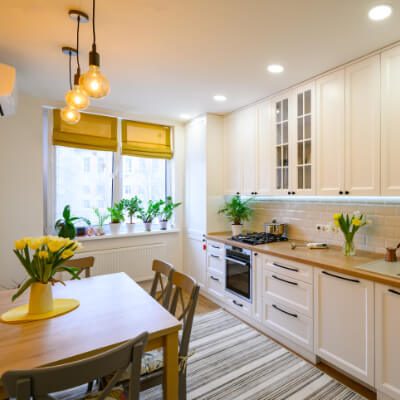
Kitchens use a mixture of ambience, task and sometimes even accent lighting.
- Island lighting. Islands are often the central and focal point within your kitchen. Accentuate this space by installing fixtures directly above this like pendants or hanging lighting, which also provides additional visibility for your food prep tasks.
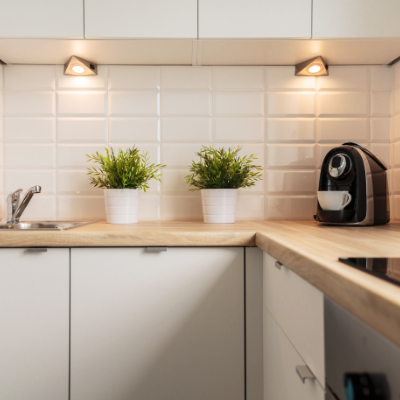
- Task lights like cabinet lights and stove lights are perfect for dedicated task spaces and illuminating dark areas.
Dining Room
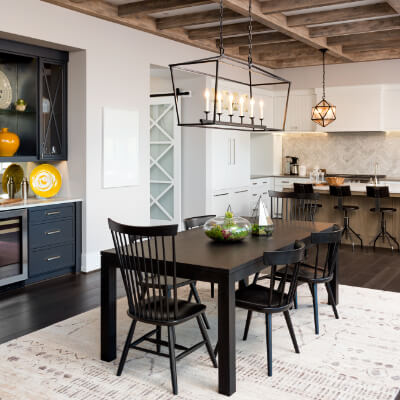
Whether your dining room is a subsection of your kitchen or an individual room adjacent to the main cooking space, here are some lighting tips for your dining space.
- Hanging lights or chandeliers. Draw focus to the main part of the room by installing pendants or hanging lights above your dining table. Whilst it has its visibility benefits, it also visually enhances a room.
- Wall Lights help create an even distribution of light. They also come in a range of designs to suit this space.
- Dimmer switches allow you to adjust the lighting level for various uses, whether it’s for a celebratory dinner or a smaller intimate gathering.
Living Room
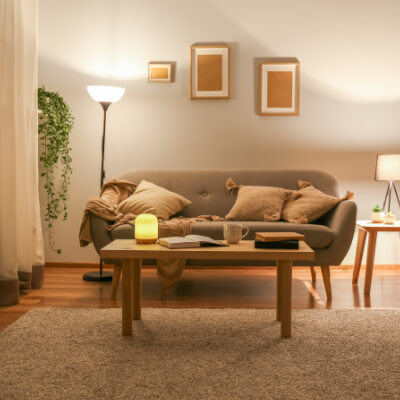
The living room is often a central space in most houses and will have a mixture of ambient, accent and task lighting.
- Floor and table lamps work well within this space and provide extra visibility for things like reading and other activities. Table lamps especially, also have decorative purposes and can uplift a given space.
- Recessed and pendant lights are great for overall illumination and work particularly well in larger spaces.
Utility Room

Whilst your utility room is possibly one of the less utilised spaces within your home, it’s also good to think about how the lighting works here.
- Overhead track lights. Some overhead track lights come with adjustable spotlights, allowing you to direct the light to specific areas.
- Motion sensor lights. Motion-controlled lighting systems are perfect for low-traffic areas as they are both convenient and energy efficient.
Bedroom

Your bedroom is a place you’ll probably spend a lot of time in, so it’s important to take special care when choosing your lights.
- Bedside lamps. These can either be mounted to the wall or positioned on your bedside tables. They are good for task lighting and reducing eye strain during activities such as reading.
- Dimmable lights will allow you to adjust the lighting according to your preference and mood.
Bathroom
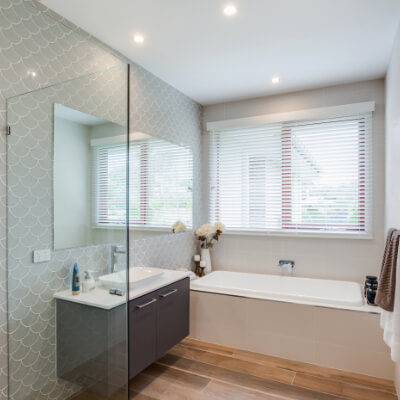
Sufficient bathroom lighting is essential for various tasks such as applying makeup, grooming and general personal upkeep.
- Vanity lighting or wall lighting can be installed to illuminate mirrors and their surrounding areas.
- Ceiling lights work well in bathrooms, providing general ambient lighting. This will also avoid any harsh glares and shadows.
Hallway
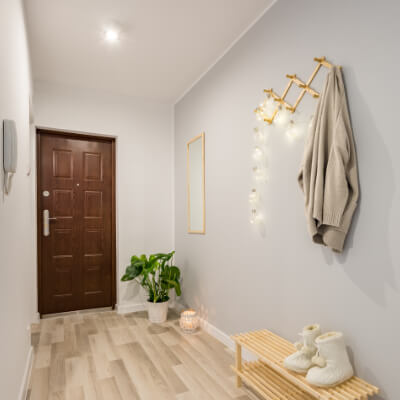
Hallways and transitional spaces require lighting that is both functional and aesthetically pleasing.
- Wall Lights. Installing wall lights along the walls of your hallway not only provides a decorative element but they also create a welcoming glow.
- Floor lighting has both a subtle and dramatic effect on your hallways. They are perfect for creating a modern and sleek look.
Conservatory
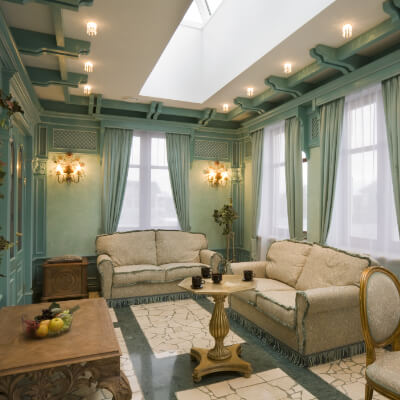
Conservatories are perfect for allowing in natural lighting. Keeping your windows obstruction free will minimise the amount of artificial lighting required. However, here are some practical measures you can use when lighting is limited.
- Floor lamps can be placed around your conservatory for creating a warm and cosy atmosphere.
- Standard lightbulbs should be sufficient for most conservatory spaces as lighting will only be required during periods with no, or limited, daylight. The lighting design for your home should complement spaces as opposed to clashing with them.
Explore Our Indoor Lights
Here at CM Electrical, we have an extensive range of light fittings and fixtures, so why not browse our indoor lighting page? We have everything from cabinet lights to chandeliers. Spotlights to semi-flush lights. We are confident that we have everything you need and are always happy to help with any queries you may have.
Why Choose CM Electrical?
With over 20 years of experience as a wholesaler of lighting fixtures and bulbs, CM Electrical is the guaranteed solution for all your lighting needs. Not only do we offer affordable and competitive prices, but our dedicated team is on hand providing customer service and support every step of the way. We source and stay ahead of all the lighting trends and offer free delivery on orders over £75.
Looking to upgrade your current fixtures or require some lighting advice for the home? Get in touch with a member of our friendly team to see how we can help you today.
Comments are closed here.